

Sun, 1944


Leopold Survage
1879-1968
Signed and dated lower right SURVAGE 3 10 44
Description of the artwork
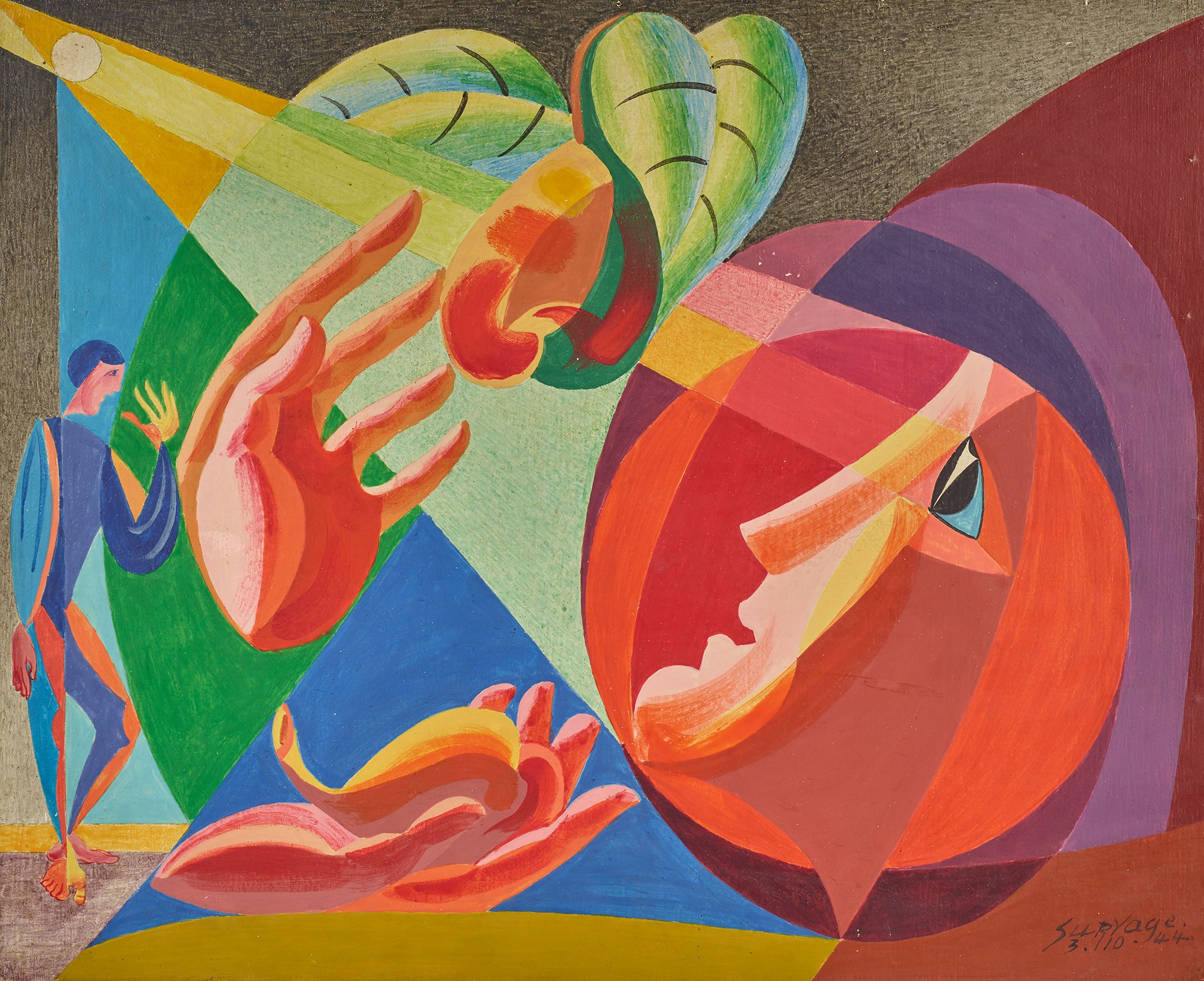
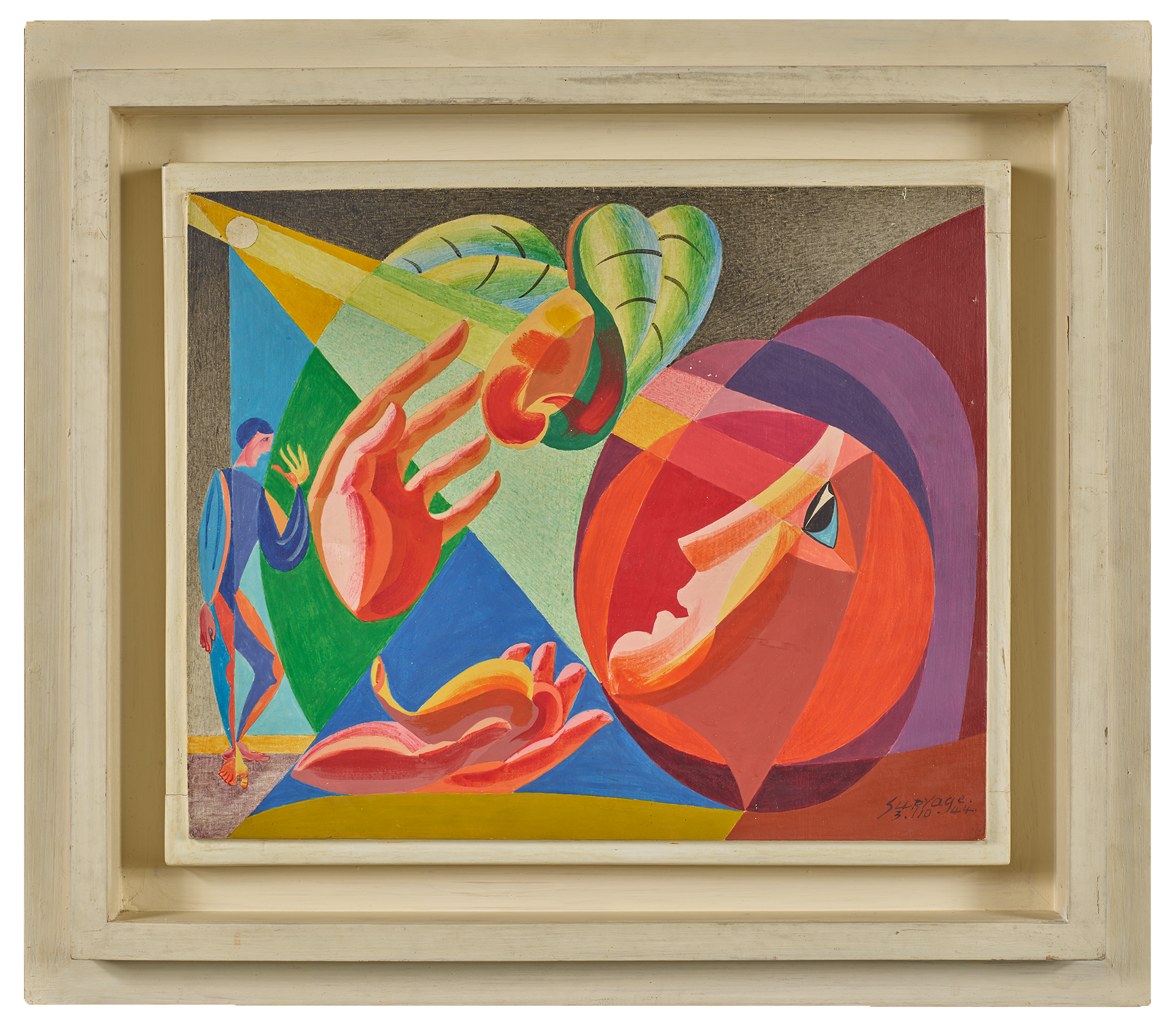
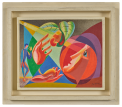
Created in 1944, this composition reflects the culmination of the artistic investigations that Léopold Survage had pursued since the 1910s.Drawing upon Cubism, the Orphist experiments of Robert and Sonia Delaunay, and his own reflections on rhythm and colour, the artist developed a deeply personal visual language in which geometry never excludes poetry. The forms interlock with remarkable fluidity, dissolving the boundary between figuration and abstraction.
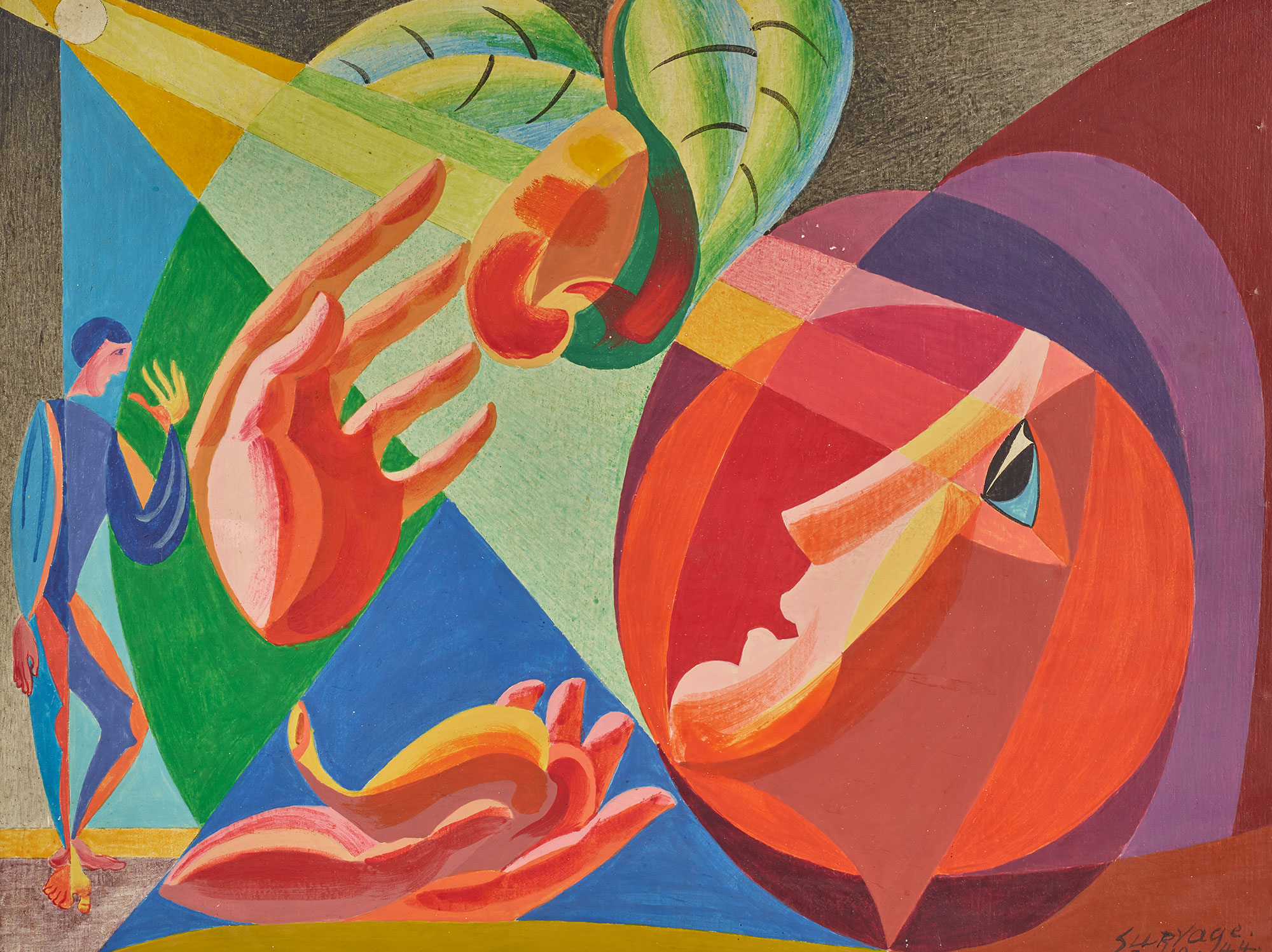
At first glance, the work appears almost abstract. Gradually, however, several recurring motifs from Survage's pictorial vocabulary emerge: a female profile, two expressive hands, a draped figure relegated to the background, and a pair of brilliantly coloured birds. Rather than narrating a scene, the artist orchestrates a dialogue between these elements, whose sweeping curves respond to the composition's strong diagonals in a subtle interplay of tension and balance.
Colour plays a fundamental role. Vivid reds, oranges, greens and blues structure the pictorial space while animating its internal rhythm. Faithful to his conception of painting as an art akin to music, Survage creates a true visual score in which every form resonates with the others. The birds, a recurring symbol throughout his oeuvre, introduce a note of freedom and lightness that echoes the introspective quality of the female face, while the enlarged hands become the vehicles of a silent, expressive language.
By synthesising geometric construction, chromatic lyricism and symbolic evocation, this composition ranks among the most accomplished expressions of Survage's artistic universe. It reveals an artist who, well into the 1940s, continued to pursue a constant search for harmony, making colour, rhythm and form the true subjects of his painting.
Origin
Paris, Loudmer-Poulain Sale, May 25, 1976, lot 294
Bismuth collection
Artworks to discover


75008 Paris, France
Saturdays from 2 to 7 p.m.