

The letter



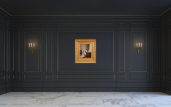
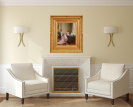
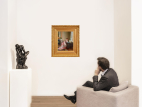
Gustave De Jonghe
1829-1893
1875 Salon, exhibited under no. 606
Villa du Temps Retrouvé, Cabourg, exhibited in the Reading Room from March to November 2021
Hotel Maison Proust, Paris, on display in the winter lounge between January 2022 and March 2026
Description of the artwork
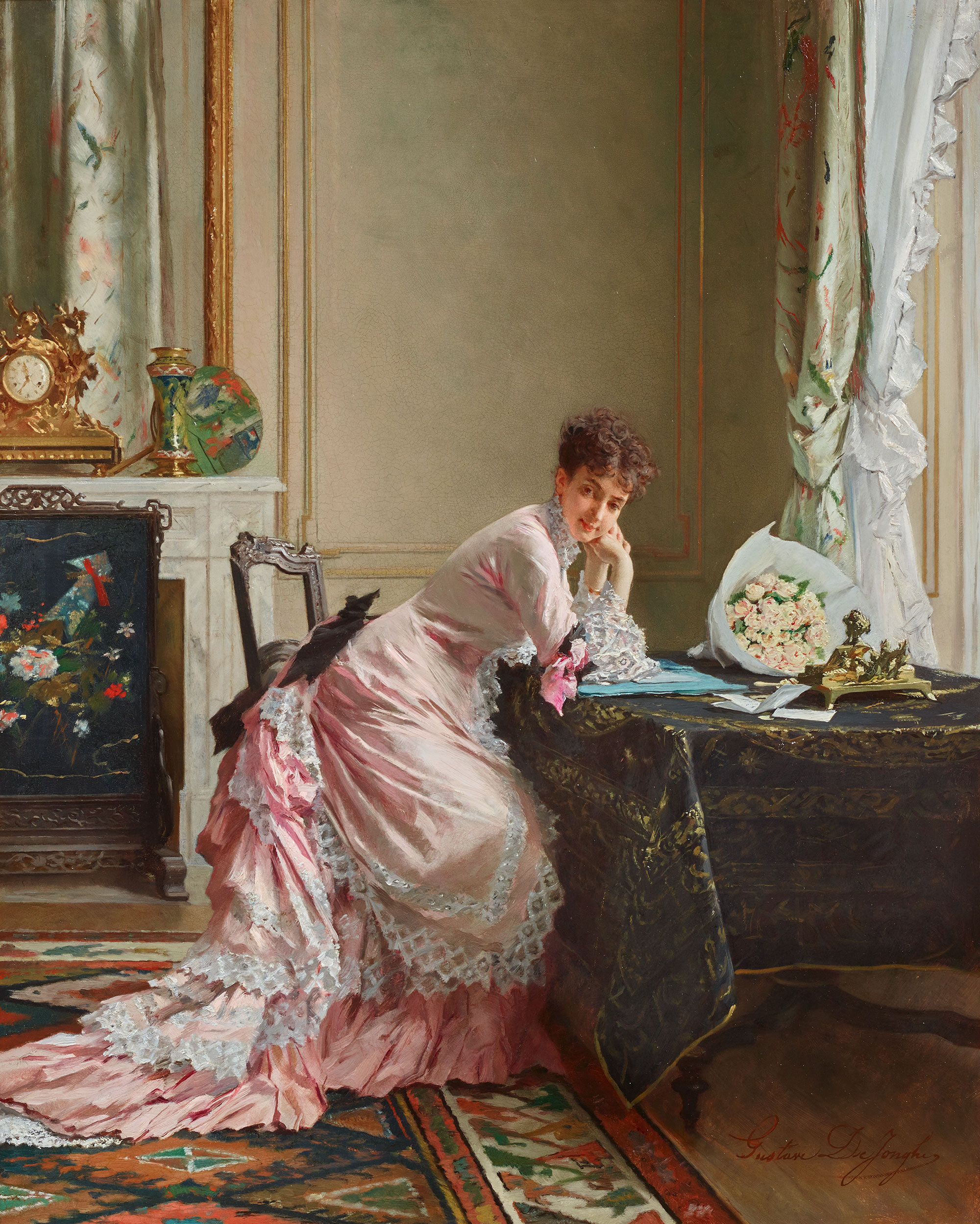
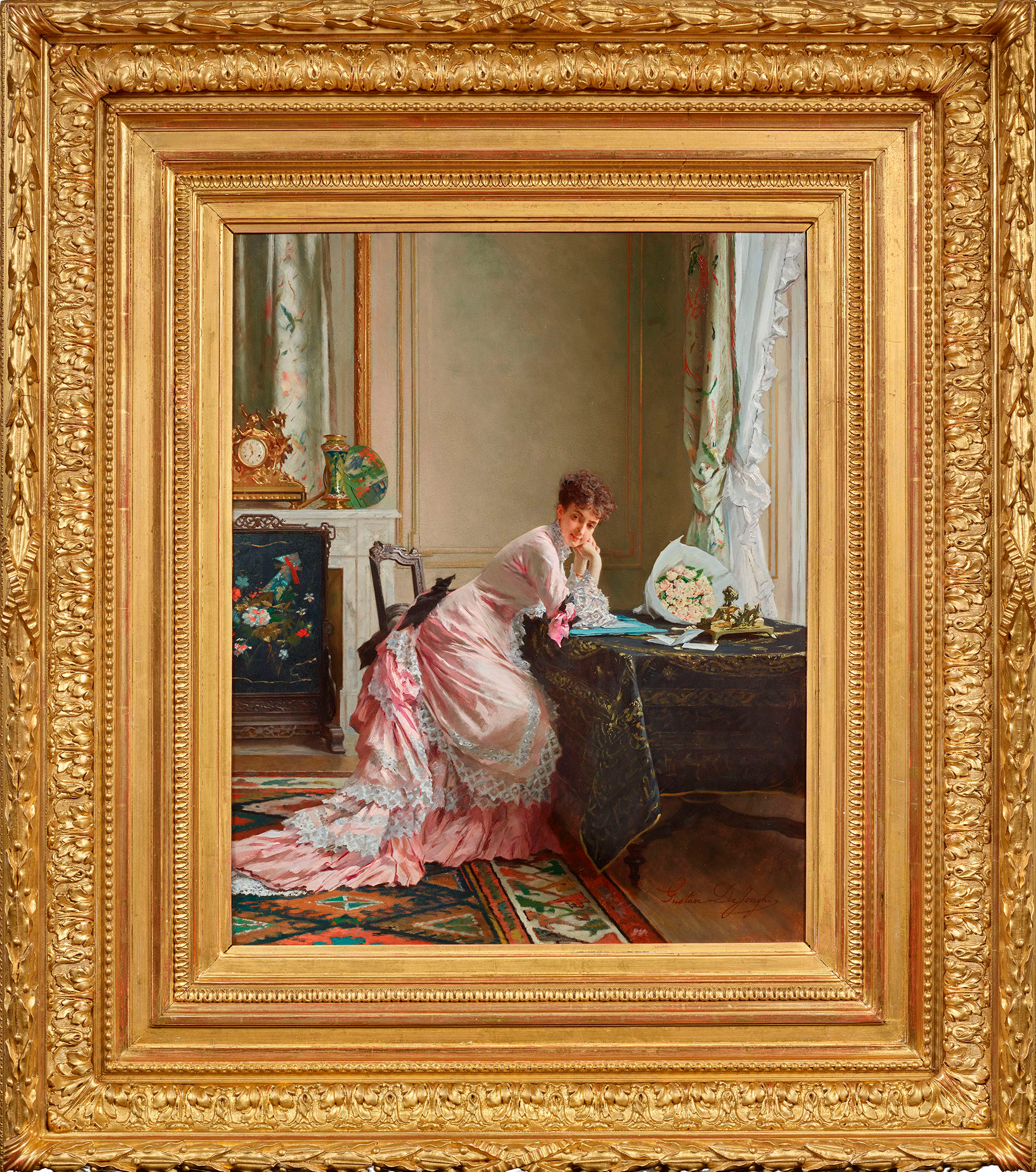
Exhibited at the 1875 Salon, this captivating oil on panel dates from the height of Gustave de Jonghe's Parisian career. It is part of a series of bourgeois interiors in which the artist depicts elegant female figures captured in the intimacy of a suspended moment. In the heart of a refined setting, a young woman, dressed in a sumptuous pink satin dress lavishly trimmed with lace, is leaning on a table covered with a richly embroidered tapestry. With her head delicately tilted and her gaze imbued with a meditative gentleness, she seems to have paused in her reading of the letter placed before her.
Unlike the romantic scenes of the previous century, de Jonghe subtly suggests emotion without dramatising it. The composition is based on a skilful balance between the figure and her luxurious surroundings. On the left, the marble fireplace adorned with a large gilded Napoleon III clock, a Japanese-style vase and an Uchiwa fan illustrates the contemporary taste for decorative arts and exoticism.
On the right, a bouquet of pearly-toned roses, probably associated with the contents of the letter, responds chromatically to the delicate shades of the dress. With a supple and precise brush, the artist excels in rendering materials: the shimmer of satin, the transparency of lace, the velvety depth of the carpet, the polished shine of bronze.
The light coming from the window with its heavy curtains drawn envelops the scene in a diffuse clarity that unifies the whole and accentuates its hushed character. Through this harmonious orchestration of colours and textures, Gustave de Jonghe goes beyond mere anecdote to convey the vagaries of inner life.
The letter, a central but discreet motif, becomes the pretext for a subtle psychological study and a demonstration of technical virtuosity, where formal elegance and intimate sensitivity are perfectly mastered, justifying the praise of poet and critic Camille Lemonnier: "De Jonghe in particular had a knack for soft, languid poses and long, frail silhouettes, relaxed in the warmth of sofas. And he displayed them with the elegance of a refined and mawkish, but always charming painter, in tranquil interiors where passion stopped at the threshold. His women are not like those of [Stevens], who painted beings of parade, love and provocative or enigmatic frivolity; rather, they have retained, from boarding school and convent, a serenity of whiteness, with a bourgeois scent of violets and reseda, gently exhaled from their dresses.". Lemonnier, Camille, The Belgian School of Painting, 1830–1905, Brussels, G. Van Oest, 1906, pp. 89–90.
Artworks to discover







75008 Paris, France
Saturdays from 2 to 7 p.m.