Description of the artwork
Following an extended stay in Madagascar during the 1920s, Georges Charles Barberis devoted an important part of his oeuvre to the island, carefully observing its landscapes, traditions, and people. Awarded a travelling scholarship, he spent several years there, producing numerous sketches and studies that would profoundly shape his sculptural work. This experience marked a decisive turning point in his career and led, among other distinctions, to his participation in the 1931 Exposition Coloniale Internationale in Paris.
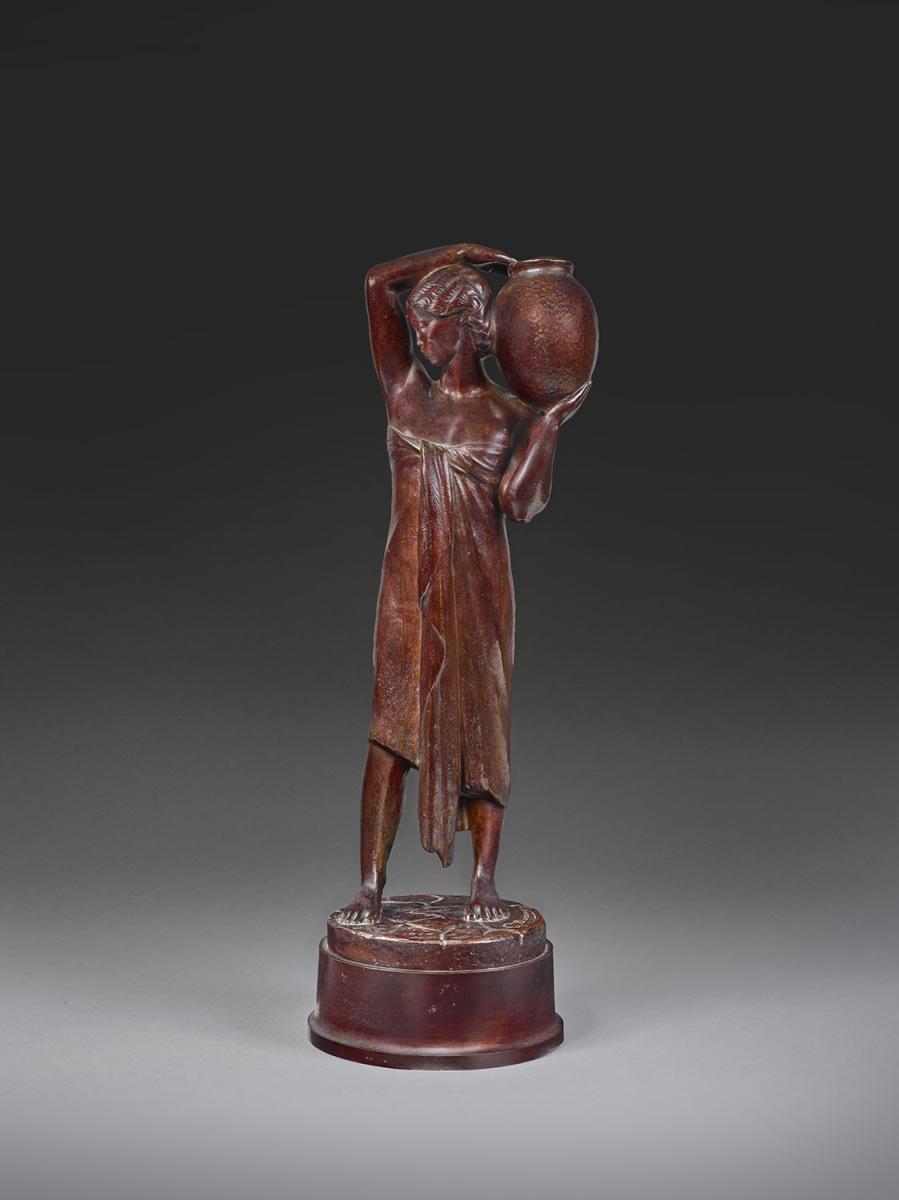
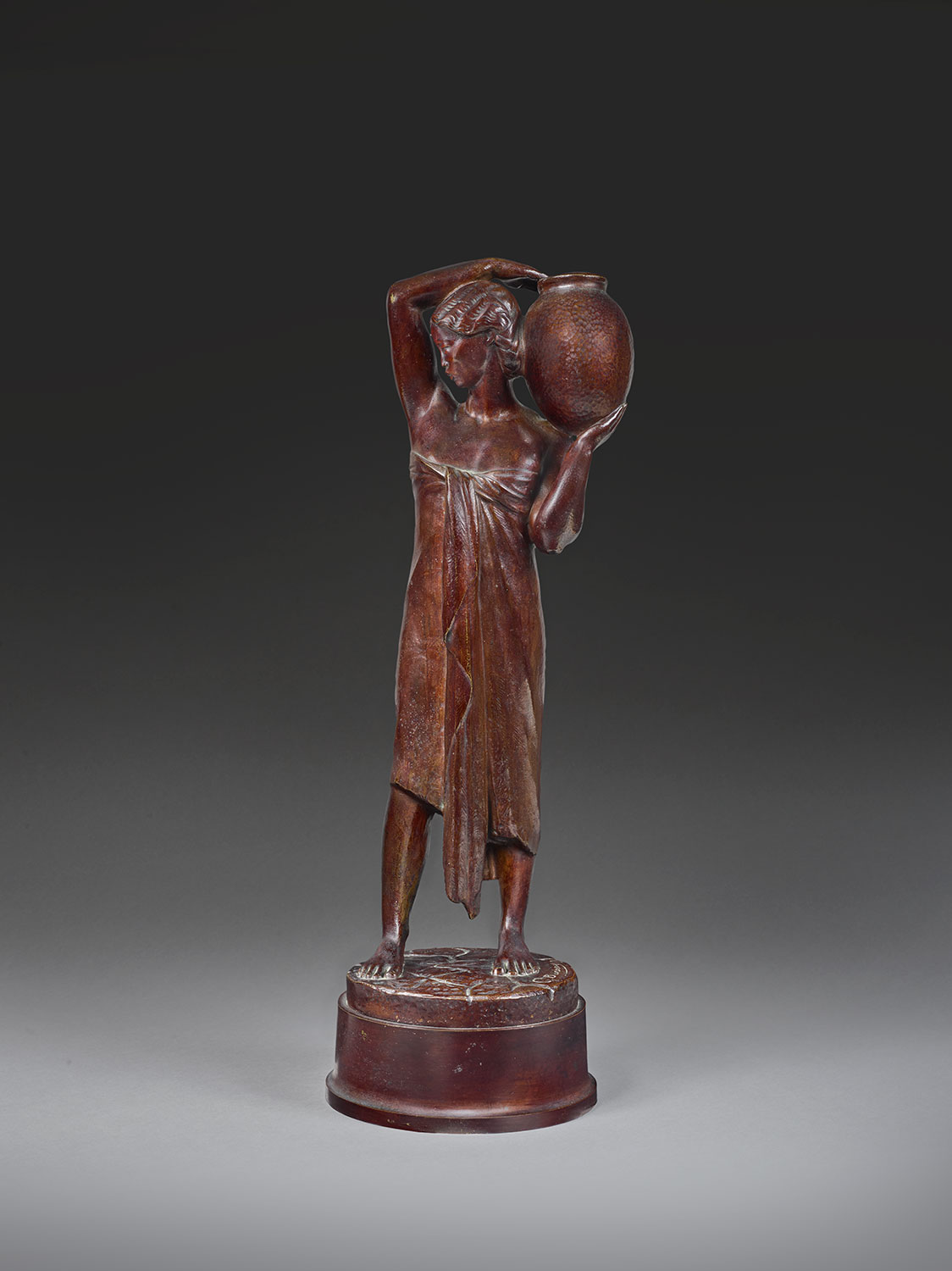
Young Malagasy Girl with a Water Jar is among the finest examples of this period. The artist portrays a young woman carrying a large water jar on her shoulder, a familiar daily gesture which, beyond its practical function, evokes water as the source of life and one of humanity's most universal acts. From the caryatids and canephoroi of Antiquity to the peasant women of Jean-François Millet and the serene figures of Aristide Maillol, the water bearer has long occupied a prominent place in the history of art, symbolising both the dignity of labour and the timeless grace of the human figure.
Barberis embraces this tradition while giving it a distinctly personal interpretation. Rather than seeking picturesque or anecdotal effects, he favours a restrained and respectful vision. The elongated silhouette, the subtle inclination of the body beneath the weight of the vessel, and the delicately modelled drapery create a composition of remarkable balance. The rich brown patina enhances the softness of the volumes while revealing the artist's sensitivity to the interplay of light across the bronze surface.
The sculpture also reflects the evolution of French figurative sculpture during the interwar period. Although Barberis remained rooted in the naturalistic tradition of his academic training, he gradually simplified his forms, seeking the purity of line and the harmony of mass rather than descriptive detail. This formal restraint lends the figure a timeless quality, elevating it beyond ethnographic observation to achieve a broader, universal resonance.
Cast by Colin, one of the leading Parisian art foundries of the first half of the twentieth century, this bronze ranks among Georges Charles Barberis's most emblematic works. It perfectly illustrates the meeting of an attentive artistic gaze with a refined sculptural language, transforming an everyday gesture into a subject of enduring beauty and quiet humanity.
Origin
Private Collection, France