

La Vittoria


Adolfo Wildt
1868-1931
Inscribed at the top right on the base: ‘LA VITTORIA’
Signed at the bottom right, on the edge of the base: ‘A. Wildt’
Circa 1918-19
Turin, Galleria Narciso, Wildt, 21 November – 22 December 1973, cat. no. 91.
Milan, Galleria Gian Ferrari, Il mestiere di scolpire per la mostra di Adolfo Wildt, October – December 1988.
Venice, Galleria d'Arte Moderna, Ca' Pesaro, Adolfo Wildt 1898–1931, 8 December 1989–4 March 1990, cat. no. 23.
Brescia, Palazzo Martinengo, Da Boccioni a Sironi. Il mondo di Margherita Sarfatti, 13 July – 12 October 1997, cat. no. 44.
Brescia, Palazzo Martinengo, Adolfo Wildt e i suoi allievi, Fontana, Melotti, Broggini e gli altri, 23 January – 25 April 2000, cat. no. 19.
Yokohama (Tokyo), Yokohama Museum of Art, La scultura del XX secolo, 21 April – 10 June 2001 (travelling exhibition in Kagoshima, Ibaraki, Sapporo, Shimane), cat. no. 3.
Milan, Palazzo Isimbardi, Spazio Oberdan, La seduzione della materia. Scultori italiani da Medardo Rosso alle generazioni recenti, 23 March – 12 May 2002.
Brescia, Galleria dell’Incisione, Scultura italiana 1915-1945. Dal fascino del Liberty al recupero della classicità, 19 May – 20 July 2013.
Milan, Galleria d’Arte Moderna, Adolfo Wildt. L’ultimo simbolista, 29 November 2015 – 14 February 2016.
Description of the artwork
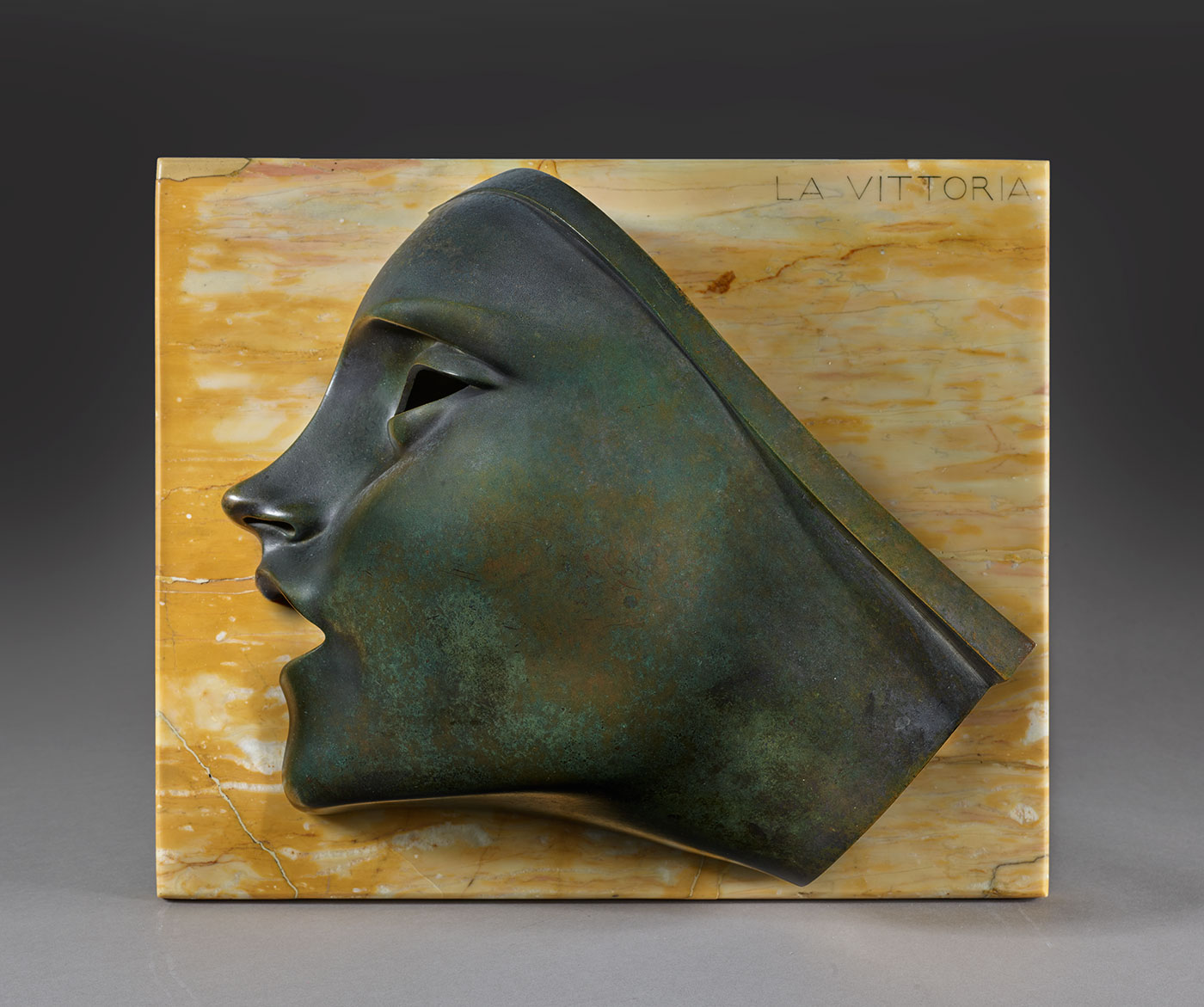
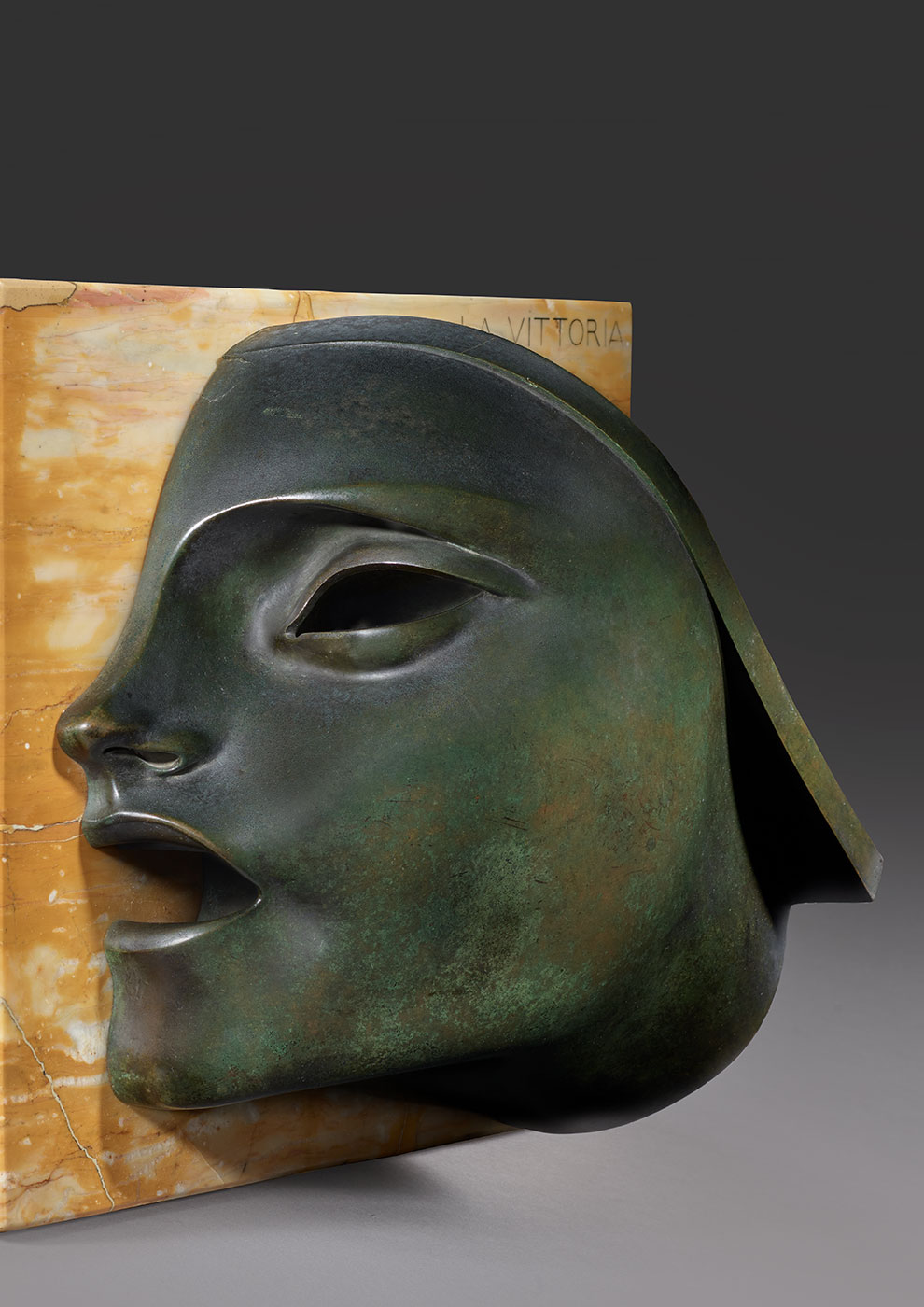
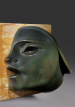
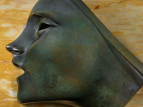
Featuring an elegant bronze mask in profile on a yellow Siena marble base, the sculpture we are presenting belongs to Adolfo Wildt's mature period and offers a striking example of the originality of his formal language. Titled La Vittoria in capital letters in the upper right corner of the marble, the work is part of an important series celebrating the end of the First World War, a time when the figure of victory took on strong symbolic and moral significance in Europe.
At his exhibition at the Galleria Pesaro in 1919, Wildt presented an imposing marble Vittoria (illustrated above), which was immediately purchased by Giuseppe Chierichetti and Guido Rossi for the atrium of their residence, the Palazzo Berri-Meregalli, a magnificent building designed by Giulio Ulisse Arata, where it still stands today. As if touching on the poetics of Italian Futurism, the sculptor depicts Victory as a comet hurtling through space, leaving a trail of stars behind her. While the sharp profile of her face seems sculpted by the air she cuts through, her wings are gilded like a Klimt mosaic, adorned with waves and circles, and her marble is polished like antique ivory. The work is striking in its uniqueness and has aroused the enthusiasm of certain critics, such as Anselmo Bucci, who said that the work was ‘so superior to the material that it makes us forget it, and so foreign to time and space that it will belong to all centuries and all countries,’ and Margherita Sarfatti: ‘His Victory has no body: it is as fast as thought, launched forward, a simple impulse, a simple wing raised: the prow of a ship and the fuselage of an aeroplane[2]’.
From 1918 onwards, aware of the symbolic power of his figure, Wildt took care to produce several bas-reliefs featuring the mask in profile in marble (fig. 1) and bronze. Isolated in this way, the profile of Victory is strongly reminiscent of one of his sources of inspiration, Pollaiolo's Portrait of a Lady, kept at the Poldi Pezzoli Museum in Milan (fig. 2). The artist presented a marble version at the Venice Biennale in 1922, then at the International Exhibition of Decorative Arts in Paris in 1925 (fig. 3).
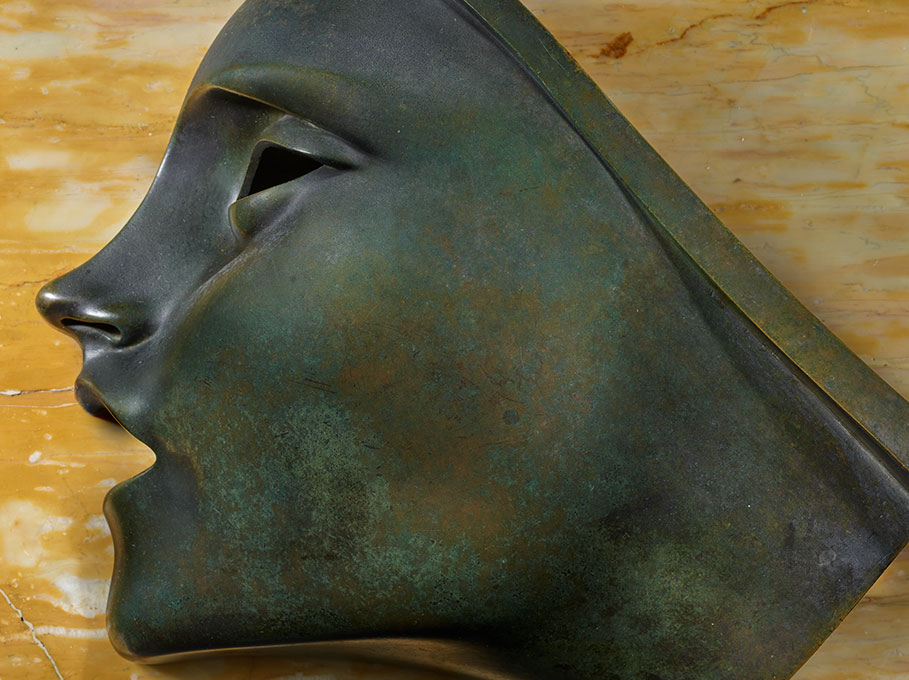
Our sculpture is one of the very few bronze casts of this subject, mounted on marble and created by the artist during the same period. This process of ‘cutting out’ and presenting a detail from one of his works independently was not new to him; he had already used it previously for the mutilated mask of the Idiot and for the reliefs of the Virgin and the putti of the Nativity. The bas-relief solution responded to his intrinsic poetic need for a radically purified vision of the image. Rather than a complete allegorical figure, the sculptor focused his attention solely on the mask. Set against the warm, veined surface of the yellow marble, the bronze with its dark patina seems to almost emerge from the stone, as if suspended in space. The volumes are simplified and polished with extremely meticulous precision: the bridge of the nose, the taut curve of the forehead and the pure modelling of the cheeks compose a gentle geometry.
Like ancient statues, the eye is hollowed out, devoid of pupils, while the half-open mouth suggests a breath, an invocation or a cry of triumph. This expressive tension gives the figure an almost mystical dimension, transforming the traditional theme of victory into a more interior and spiritual vision. Stripped of all heroic attributes, Vittoria thus becomes a universal symbol, suspended between exaltation and meditation, and fully illustrates the uniqueness of Wildt's language, at the crossroads of fin-de-siècle symbolism and the formal explorations of modern sculpture.
[1] Bucci, A., ‘Wildt,’ Il Secolo XX, Milan, April 1919, p. 281.
[2] Sarfatti, M., ‘A. W. e l'esposizione alla Galleria Pesaro,’ Il Popolo d'Italia, Milan, 10 February 1919.
Origin
Private Collection, Milano
Literature
Pinottini, M. (ed.), exhibition catalogue Wildt (Turin, Galleria Narciso, 21 November – 22 December 1973), catalogue no. 91, n. p.
Mola, P. (ed.), exhibition catalogue Il mestiere di scolpire Il mestiere di scolpire per la mostra di Adolfo Wildt (Milan, Galleria Gian Ferrari, October–December 1988), Milan, Franco Maria Ricci, 1988, pp. 35–38.
M. D. B., ‘E il momento di Wildt,’ Epoca, no. 1987, Milan, 13 November 1988, p. 195.
Mola, P., Scheiwiller, V., ‘Wildt,’ F.M.R., Milan, 1988, pp. 68, 152.
Mola, P., Scheiwiller, V. (eds.), exhibition catalogue Adolfo Wildt 1898-1931 (Venice, Galleria d'Arte Moderna Ca' Pesaro, 8 December 1989 – 4 March 1990), Milan, Arnoldo Mondadori, 1989, cat. no. 23 p. 171, reproduced p. 66.
Mola, P., Paolini, C. (trans.), ‘The Unknown Symbolist: Wildt, Lombard Expressionist,’ FMR, vol. 6, no. 22, October 1989, pp. 83, 91.
Pontiggia, E. (ed.), exhibition catalogue Da Boccioni a Sironi. Il mondo di Margherita Sarfatti (Brescia, Palazzo Martinengo, 13 July–12 October 1997), Milan, Skira, 1997, cat. no. 44, reproduced on pp. 133 and 220.
Pontiggia, E. (ed.), exhibition catalogue Adolfo Wildt e i suoi allievi, Fontana, Melotti, Broggini e gli altri, (Brescia, Palazzo Martinengo, 23 January–25 April 2000), Milan, Skira, 2000, cat. no. 19, reproduced on p. 71.
Imponente, A. (ed.), exhibition catalogue La scultura del XX secolo (Yokohama, Yokohama Museum of Art, 21 April–10 June 2001, then Kagoshima, Ibaraki, Sapporo, Shimane), cat. no. 3, pp. 28–31.
Imponente, A. (ed.) exhibition catalogue. La seduzione della materia. Scultori italiani da Medardo Rosso alle generazioni recenti (Milan, Palazzo Isimbardi, Spazio Oberdan, 23 March - 12 May 2002), Cinisello Balsamo, Silvana editoriale, 2002, pp. 39-40, 157-158.
Artworks to discover


75008 Paris, France
Saturdays from 2 to 7 p.m.