

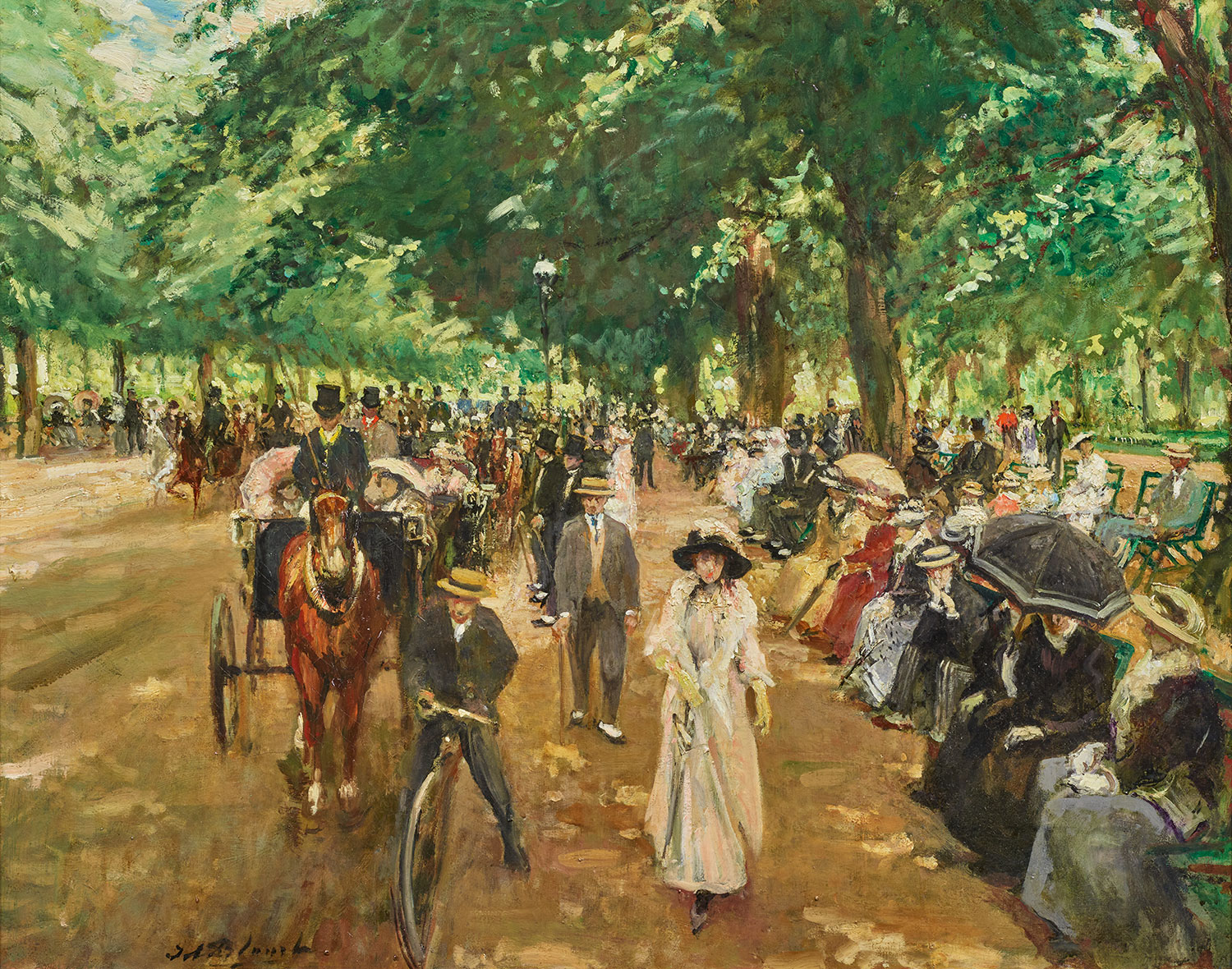
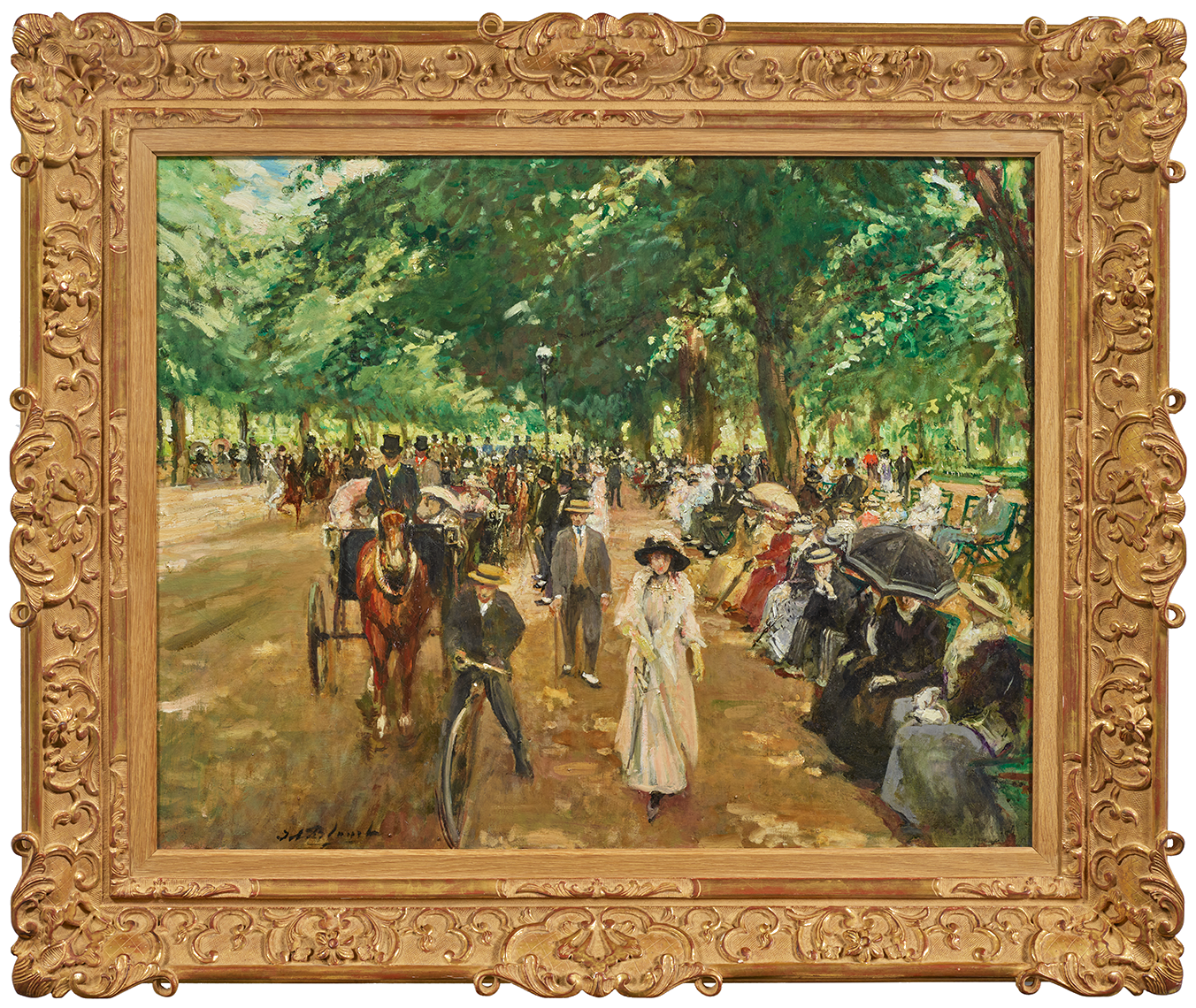
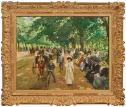
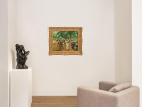
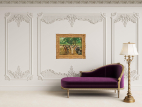
Rotten Row, Hyde Park, London



Blanche Jacques-Émile
1861-1942
Signed lower left 'J.E. Blanche'
Paris, National Library of France, André Maurois, 2 October–4 December 1977, cat. no. 290.
Description of the artwork
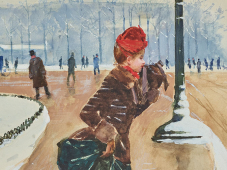
The large oil on canvas that we are presenting here was painted during Jacques-Émile Blanche's stays in London at the turn of the century, a period during which the artist, who was deeply attached to England, observed the social life of the British capital with renewed acuity.
Painted around 1907, the year in which he completed his portrait of Henry James, this view of Rotten Row in Hyde Park is one of the most accomplished examples of his interest in outdoor social scenes, halfway between elegant chronicle and atmospheric study. The composition is organised along the shaded avenue, where a lively crowd of horsemen, walkers and carriages gather.
In the foreground, a female figure dressed in a light-coloured dress walks at a measured pace between two dynamic diagonals that give rhythm to the depth of the space. On the left, a young man pushing his bicycle walks ahead of a line of horse-drawn carriages, while on the right, a row of benches occupied by elegant women sheltering under their parasols forms a fashionable frieze.
Keen on modernity, Blanche drew inspiration for his composition from a postcard of the British capital, making several modifications to it and offering a very interesting and rare insight into his relationship with photography. With his brush, the artist truly transcends the black-and-white image, deploying a free and fragmented touch inherited from his frequent contact with English painters and his keen interest in Impressionism. The bright greens of the vegetation filter the light and envelop the scene in a warm, almost vibrant atmosphere. As a disciple of Renoir, the painter favours the overall impression: the silhouettes, sometimes barely sketched, are brought to life by the accuracy of the poses and the vividness of the colour contrasts.
Far from being a meticulous description, Rotten Row in Hyde Park above all captures the social elegance and movement of a world on display. Blanche captures the spirit of a place emblematic of aristocratic London life, offering a vision that is both worldly and sensitive, where the collective portrait blends into the shifting light of a summer afternoon.
Published by the painter to illustrate one of his works, Portraits of a Lifetime, published in 1937, our painting has a prestigious provenance, having belonged to the writer André Maurois. Introduced to each other by Daniel Halévy, Maurois posed for Blanche in 1924, and it was on the occasion of his marriage to Simone de Caillavet in 1926 that the artist gave him this striking view of London. Maurois never ceased to admire his friend deeply, as he confided to Paul Collet in 1966: ‘He is an artist of rare intelligence, immense culture and great elegance. I admired his talent as a painter and writer. What always intrigued and fascinated me about him was that, while he was a man of the 19th century in his tastes and lifestyle, he was also oriented towards modernity and all the avant-garde movements.’
Origin
André Maurois (1885–1967), then by descent
Literature
Blanche, Jacques-Émile, Portraits of a Lifetime 1870–1914, English translation by Walter Clement, London, J. M. Dent & Sons Ltd, 1937, reproduced on p. 167.
This work is referenced in Jane Roberts and Muriel Molines' online catalogue raisonné of Jacques-Émile Blanche (www.jeblanche-catalogue.com) under the number RM 1088.
Artworks to discover





75008 Paris, France
Saturdays from 2 to 7 p.m.