

The Barber of Suez



Léon Bonnat
1833-1922
Description of the artwork
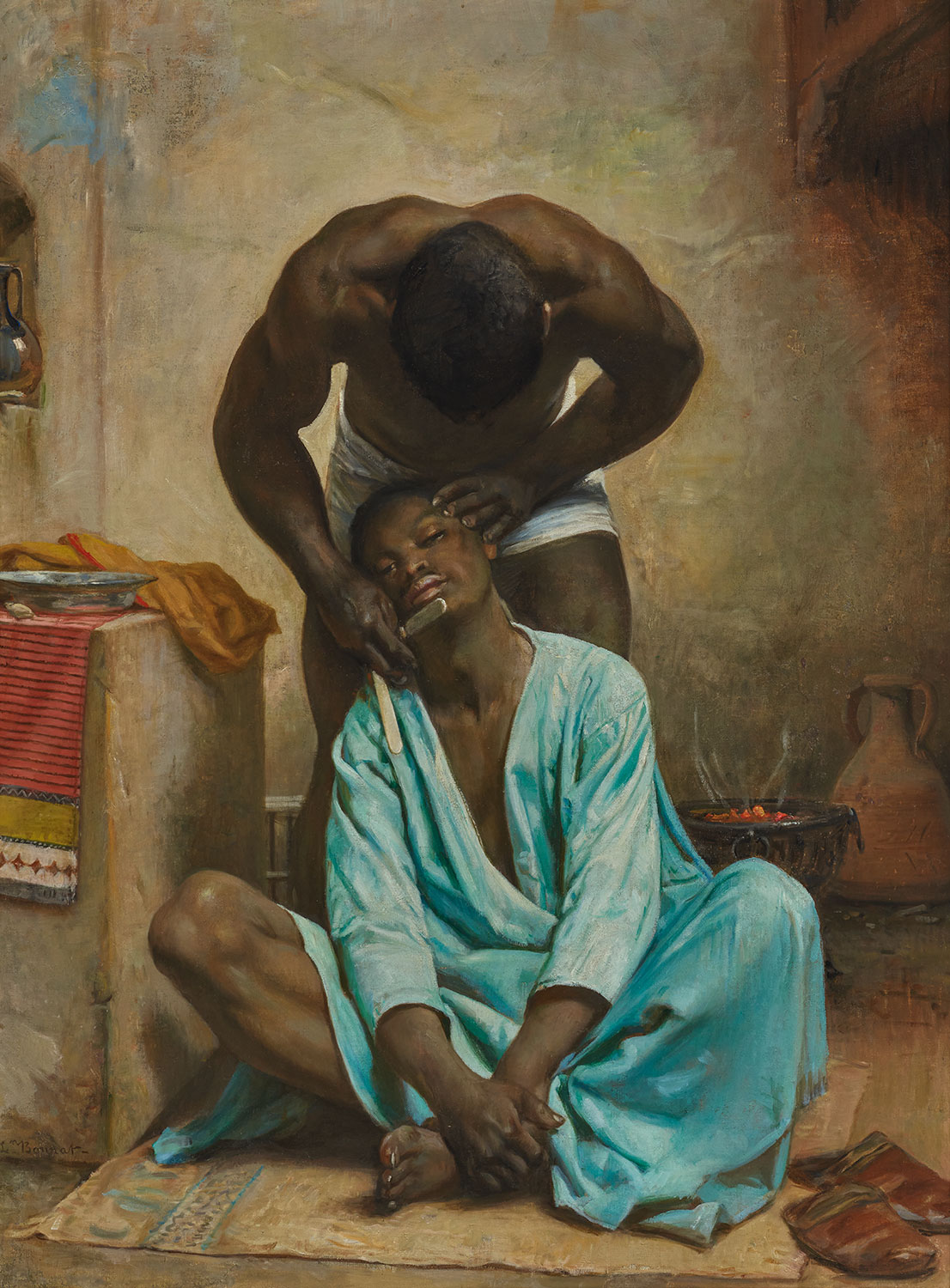
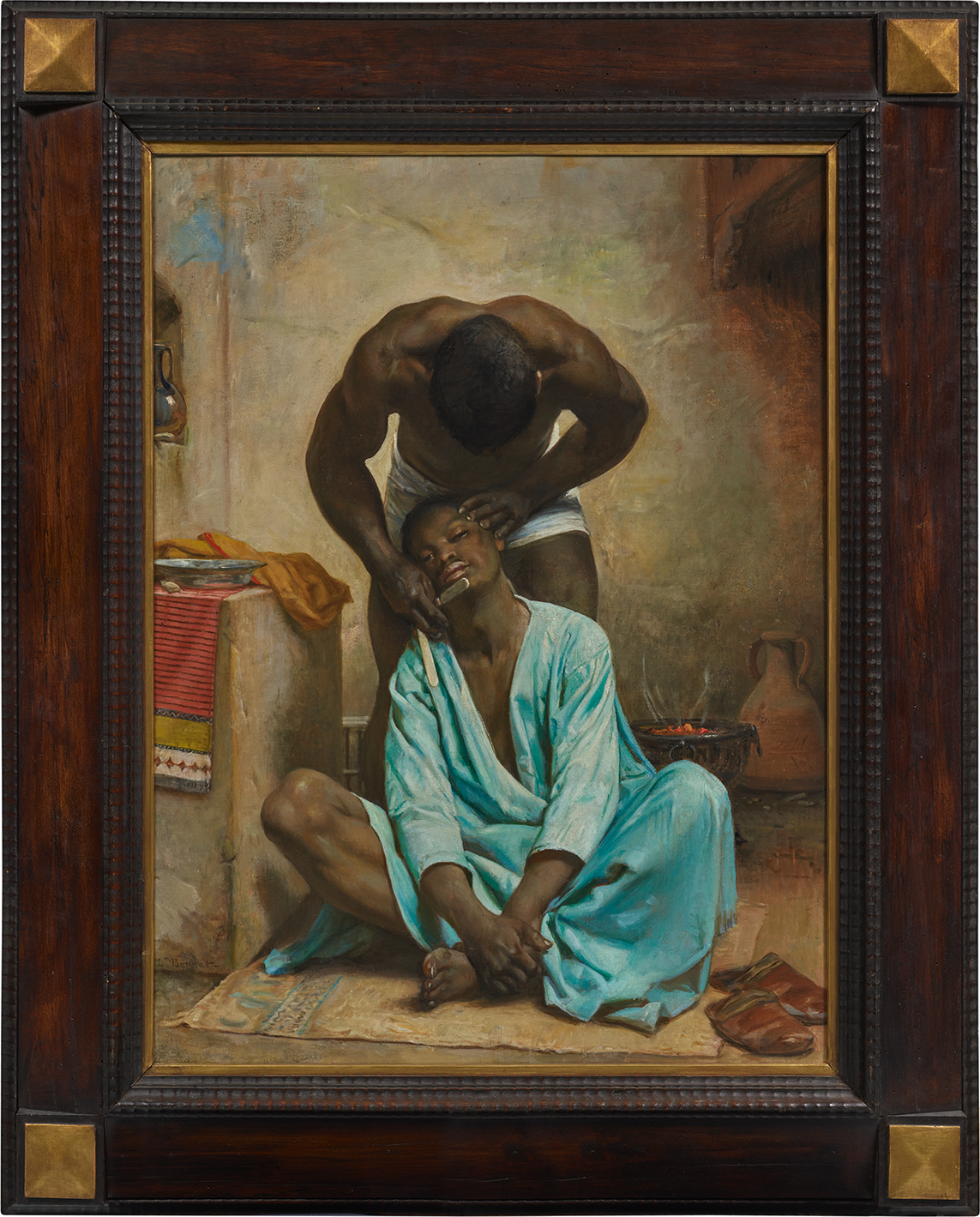
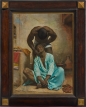
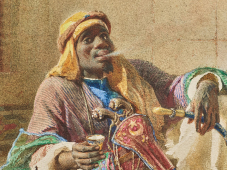
Widely acclaimed by critics at the 1876 Salon, The Barber of Suez, now housed at the Minneapolis Curtis Gallery, is ‘an extraordinary work, a gem of its kind, bordering on perfection’ according to a review in Le Voleur in 1876.
The themes chosen from the trip to the Orient, and treated and ‘staged’ with objects and clothing brought back from the trip, are varied. Some works are limited to large-format representations of typical characters: Standing Arab Chief (1872), Arab Sheikh (1880-1881). Others are genre scenes, grouping several characters in their everyday activities, in the tradition of Italian genre scenes: A Street in Jerusalem (1870), Arabs at the Café (circa 1870), Fellah Women at the Wash House (1872-1873), and Sheikhs of Aqaba (1870-1872) .
Works illustrating a moment in everyday life in Middle Eastern cities, such as the traditional visit to the barber, can also be classified in this genre. Bonnat treated this subject twice in two works that were very successful at the Salon: ‘Turkish Barber’ painted in 1872 and presented at the 1873 Salon, and ‘Negro Barber of Suez’ painted in 1876 and presented at the Salon the same year. This would be the painter's last Orientalist painting presented at the Salon, as he would mainly send portraits after this date.
In a few rare cases in Orientalist painting, as in Italian genre scenes, Bonnat drew heavily on a work he had presented and which had been appreciated by the public, critics or a potential patron, to create a new version. This is the case with ‘Fellah Woman and her Child’, of which he produced two versions with a few minor changes in 1869 and 1870, and also with ‘Arab Removing a Thorn from his Foot’, of which two versions are known.
Our painting, which is larger than the one exhibited at the Salon, is a rediscovery on the art market that follows the same approach as the painter, revisiting a successful painting with minor variations in its composition.
Origin
Private Collection, Italy
Artworks to discover


75008 Paris, France
Saturdays from 2 to 7 p.m.